
Artificial intelligence is becoming an increasingly important technology in modern agriculture. Farmers are facing challenges such as changing weather patterns, rising production costs, water shortages, labor constraints, and the need to produce more food for a growing population. AI can help address some of these challenges by analyzing large amounts of information and supporting faster, more informed decisions. From monitoring crops to managing livestock and predicting weather conditions, artificial intelligence is creating new possibilities for farmers around the world.
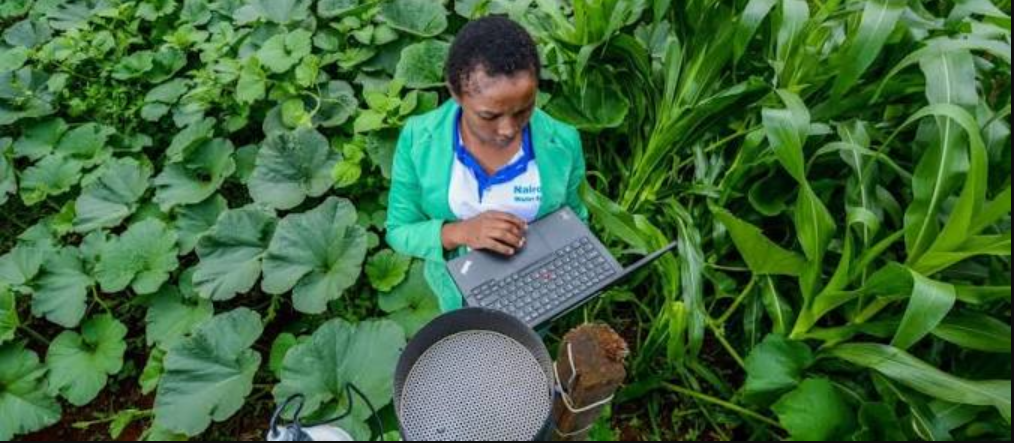
One of the most important applications of AI in agriculture is precision farming. Precision agriculture uses technologies such as GPS, sensors, satellite imagery, drones, and machine learning to understand conditions across different parts of a farm. Instead of treating an entire field in exactly the same way, farmers can identify areas that need more water, fertilizer, or pest control. This can help reduce waste while improving the use of agricultural resources.
AI is also helping farmers with crop monitoring. Traditionally, farmers have had to inspect large fields manually to identify problems such as disease, nutrient deficiencies, or pest damage. AI-powered systems can analyze photographs and images collected by drones, satellites, or smartphones to identify unusual patterns. Early detection can allow farmers to respond before a problem spreads across a large portion of a crop.
Another major application is pest and disease detection. Machine-learning systems can be trained to recognize visual signs associated with plant diseases and pest infestations. Farmers can use these systems to identify potential problems at an earlier stage. This can reduce unnecessary pesticide applications and allow treatment to be targeted more precisely. Better detection can also help protect crop quality and reduce economic losses.
Artificial intelligence can contribute to better irrigation management as well. Water is one of the most important resources in agriculture, and inefficient irrigation can result in significant waste. AI systems can combine information about soil moisture, weather forecasts, crop conditions, and historical water use to recommend when and where irrigation is needed. Automated irrigation systems can then deliver water according to these recommendations, helping farmers use limited water supplies more efficiently.
AI is also changing weather and yield forecasting. Weather conditions can have a major impact on agricultural production, and unexpected droughts, heavy rainfall, heat, or storms can damage crops. AI models can analyze historical weather data, satellite observations, soil information, and other variables to estimate potential risks. Farmers can use these predictions to adjust planting dates, irrigation schedules, crop choices, and harvesting plans.
Another area of development is automated agricultural machinery. Modern tractors and farm equipment can use AI, GPS, cameras, and sensors to perform certain tasks with increasing levels of automation. Autonomous or semi-autonomous machines can help with planting, spraying, harvesting, and field monitoring. These technologies may reduce the amount of repetitive manual work required and allow farmers to manage large areas more efficiently.
AI-powered robots are also being developed for agricultural tasks. Robots can potentially identify ripe fruits, remove weeds, plant seeds, monitor crops, and perform selective harvesting. Agricultural robotics is particularly interesting in regions where farms face labor shortages or where certain crops require large amounts of manual work. Although many agricultural robots are still developing, their capabilities are expected to improve as computer vision, sensors, and machine learning become more advanced.
Livestock farming can benefit from artificial intelligence as well. AI-based livestock monitoring systems can analyze information from cameras, sensors, wearable devices, and other technologies. These systems can help farmers monitor animal movement, feeding behavior, health indicators, and other patterns. Identifying unusual behavior early may allow farmers to investigate potential health problems before they become more serious.
AI can also improve farm management and decision-making. Farmers have to make decisions about planting, fertilization, irrigation, pest control, harvesting, storage, and sales. Digital platforms can combine farm records with market information, weather data, soil conditions, and crop performance. AI can then provide recommendations or identify patterns that may not be obvious from individual data sources. This can support more efficient planning and reduce uncertainty.
Another important advantage of AI is its potential to reduce agricultural waste. Food can be lost at different stages of production, harvesting, transportation, and storage. AI systems can help predict crop demand, improve harvesting schedules, monitor storage conditions, and optimize supply chains. Better forecasting can reduce the likelihood of producing crops that cannot be sold or allowing harvested products to spoil before reaching consumers.
Artificial intelligence can also support sustainable agriculture. Farmers are under increasing pressure to produce food while protecting soil, water, biodiversity, and other natural resources. AI can help identify ways to use fertilizer, pesticides, fuel, and water more efficiently. When combined with renewable energy, conservation practices, and precision farming, digital technologies can contribute to more sustainable agricultural systems.
However, the adoption of AI in agriculture faces several challenges. Advanced technologies can be expensive, particularly for small-scale farmers who have limited access to financing. Farmers may also need reliable internet connections, electricity, smartphones, sensors, and technical support. In rural areas where digital infrastructure is limited, adopting sophisticated AI systems can be difficult. Making agricultural technology affordable and accessible will therefore be important for ensuring that its benefits reach a broad range of farmers.
There are also concerns about data ownership and privacy. AI systems often require large amounts of information about farms, crops, soil, machinery, and production practices. Farmers need to understand who owns this data, how it is stored, and how it can be used. Transparent data policies and appropriate cybersecurity measures are important because agricultural information can have significant economic value.
The future of AI in agriculture will likely involve greater integration between different technologies. AI could work together with drones, satellite imagery, robotics, Internet of Things sensors, autonomous machinery, weather services, and digital marketplaces. Instead of using separate systems for individual tasks, farmers may eventually use integrated platforms that provide a comprehensive view of their farms. These systems could help farmers make decisions from planting through harvesting and distribution.
In conclusion, artificial intelligence is revolutionizing agriculture by helping farmers monitor crops, manage water, detect diseases, predict yields, automate machinery, monitor livestock, and improve overall farm management. The technology has the potential to increase productivity while reducing waste and making better use of valuable resources. However, challenges involving cost, infrastructure, digital skills, data security, and accessibility must be addressed. As AI continues to develop, its greatest impact may come from combining intelligent software with practical farming knowledge, allowing technology and farmers to work together to create more productive, efficient, and sustainable agricultural systems.
Leave a Reply